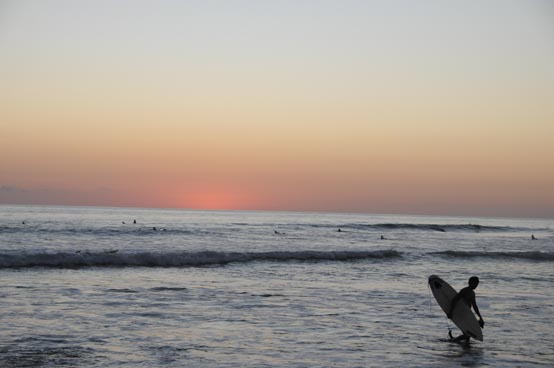
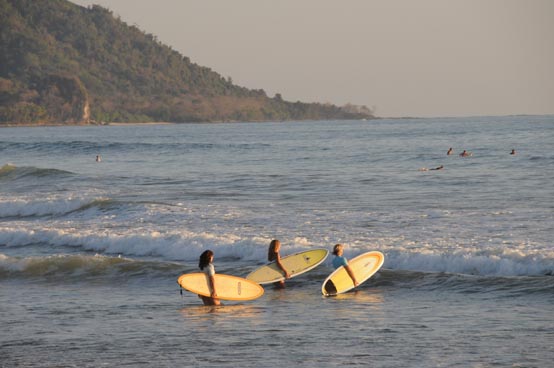
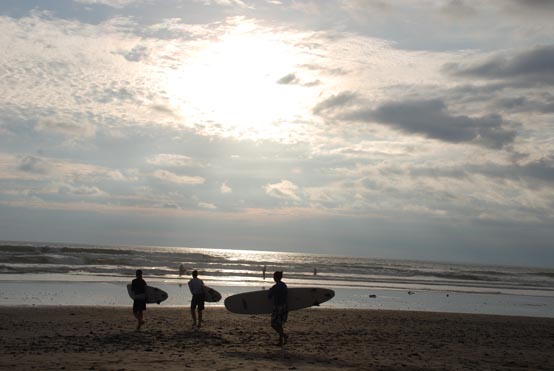
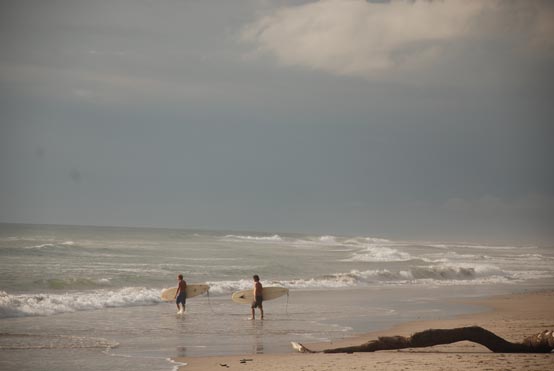
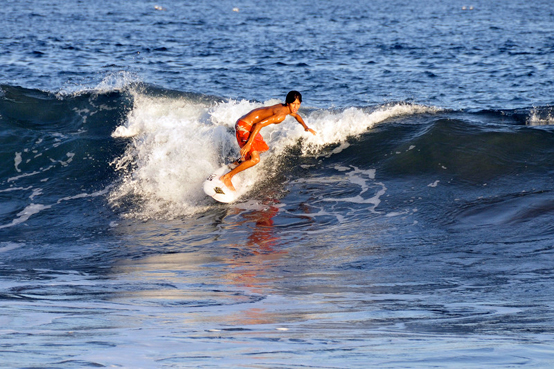
Where should you take a first lesson?
At Playa Hermosa, 15 to 20 minutes north of the crossroads. It’s a long beach with a sandy bottom and easy, peaky waves, which is why most surf schools teach there. The currents get stronger toward the north end, so stay where your instructor puts you.
Surf shops all over Santa Teresa and many hotels book lessons with a board included, and they’ll pick the beach and the tide for the day’s conditions. Couples can book a private lesson together; families usually do a group or private lesson for the kids while someone watches from the sand.
Insider tip: book a morning lesson, before the midday sun. Tell the school everyone’s age and swimming level when you book, and let them choose the spot on the day.
Kids and teens
Santa Teresa is at its best for older kids and teens: the surf town feel, the cafés and a lesson at Playa Hermosa make for a great few days. Each school sets its own minimum age, so check when you book. For younger children, the reef-protected bay at Sámara is a gentler place to learn. More in our Santa Teresa with kids guide.
When are the waves smallest?
From December to April, the dry season. The northeast wind blows offshore on this west-facing coast, so the waves are clean and generally smaller: the best time for a first lesson. From May to November the swells get bigger, especially from August to October. See the best time to visit Santa Teresa.
How do you stay safe?
- Learn with a school the first time, and surf only where your instructor tells you.
- The beaches here have strong currents and no lifeguards to count on. If you’re pulled out, stay on your board, don’t fight the current, and paddle parallel to the shore until you’re out of it.
- Wear a rash guard and reef-safe sunscreen, and drink plenty of water.
- Watch out for rocks: several breaks here are over reef or rock, which is why they’re for experienced surfers.
The local breaks (for experienced surfers)
When locals talk about surfing Malpaís, they mean the whole coast from Cabo Blanco up to Manzanillo, with beach breaks and point breaks, lefts and rights. Most directions below start from “the crossroads,” the main junction where the road from Cóbano meets the coast at Playa Carmen. Sandbars and conditions change fast, so check the latest at a surf shop in town before you paddle out, and stick to the spots that match your level.
Mar Azul
A slab of rock that shows at low tide splits this spot into a left and a right. It’s best when an overhead swell hits the left on a dropping tide. The rocks help shape the waves but also make them risky, so Mar Azul is for confident surfers.
El Carmen
From the crossroads, go straight to the beach and you’re there. El Carmen has a long right wall and a shorter left over a sloping sand bottom. It’s a busy beach break with strong currents, better suited to intermediate and experienced surfers than to a first lesson.
Santa Teresa
Turn right at the crossroads and you’ll reach Santa Teresa in about 1.8 miles (3 km). It tends to pick up more swell than El Carmen and holds its shape better at low tide.
Playa Hermosa
Just north of Santa Teresa, and much less crowded. Waves peak all along the beach, which makes it the lesson beach on small days, and when the beach breaks get big, the reefs and points start working.
Playa de Los Suecos
Turn left at the crossroads and drive about 2.5 miles (4 km). Park where you see the fishing boats, then walk about 100 yards south along the rocks. Paddle out through the channel near the hotel. It’s a fast left-hander with a long, workable wall that gets hollower as it gets bigger.
Punta Barrigona
Head for the beach at the Mar Azul restaurant, between Los Suecos and the crossroads. A long left wraps around the point and turns into a fun, playful wave on the inside. It needs a lot of swell to work.
Manzanillo
Turn right at the crossroads and go about 5 miles (8 km) to the village of Manzanillo. There’s an offshore reef at the north end of the beach, but the waves are fickle and need a solid swell.
Want lessons as part of a longer trip?
Lessons and rentals are easy to find in Santa Teresa and Malpaís. If you’re planning the whole trip, our insiders plan the route and can fit a lesson in on the right day. Read more about us, or see things to do in Santa Teresa for everything beyond the waves.
Frequently asked questions
Is Santa Teresa good for beginner surfers?
Yes, if you learn at the right beach. Playa Hermosa, just north of Santa Teresa, has the gentlest waves and a sandy bottom, and it's where most lessons happen. Playa Carmen and the reef breaks are for intermediate and experienced surfers.
When are the waves best for a first lesson?
December to April. The dry-season wind blows offshore and the waves are generally smaller and cleaner. From May to November the swells get bigger, so a lesson is still possible but your instructor will be pickier about the spot and the tide.
How old do kids need to be for surf lessons?
Each school sets its own minimum age, so ask when you book. Some Santa Teresa schools teach kids from about 5, and private lessons suit under-12s best. Kids who swim confidently and enjoy the waves do best. Santa Teresa suits older kids and teens; for younger children, the calm, reef-protected bay at Sámara is an easier place to learn.
How long is a surf lesson?
Usually about an hour and a half in the water at the Santa Teresa schools, though multi-day surf camps run longer morning sessions. For a first lesson, one session is plenty: paddling and popping up are tiring, and the sun is strong. Morning lessons are the most comfortable.
Do I need to bring a surfboard?
No. Lessons usually include a board, and surf shops in town rent them by the day. If you're flying to Cóbano, note that SANSA only carries boards up to 6'7", as checked baggage, for a fee.
Is it safe to surf in Santa Teresa?
With an instructor and at the right beach, yes. The beaches here have strong currents and there are no lifeguards to count on, so learn with a school, stay in the zone your instructor chooses, and don't paddle out alone at the reef breaks.