
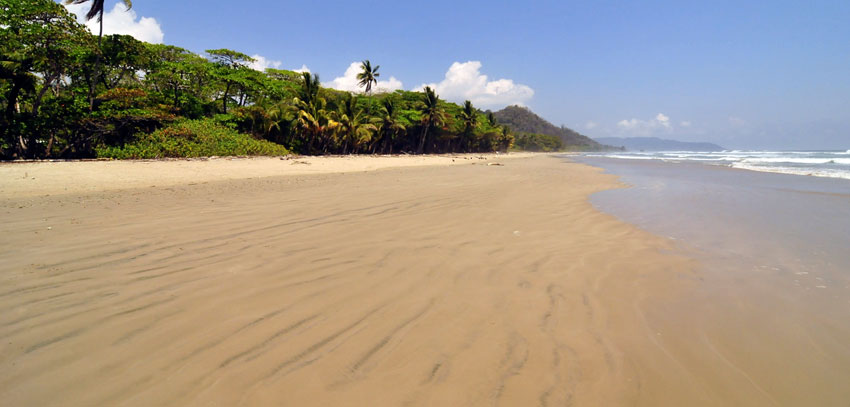

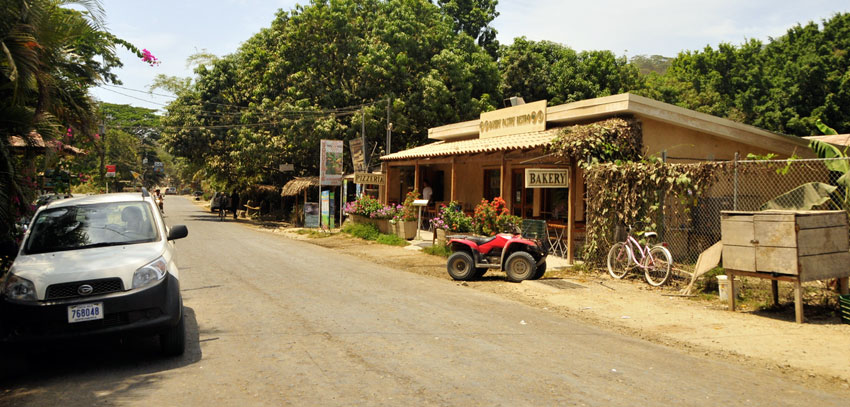
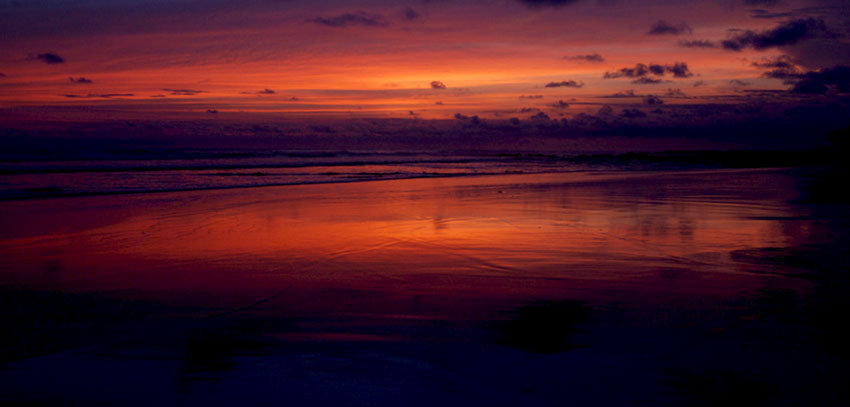
Santa Teresa and Malpaís are on the southern tip of the Nicoya Peninsula, which gets a little more rain than the Guanacaste beaches farther north. The year splits into a dry season from December to April and a rainy, or "green", season from May to November, with a drier spell in the middle and the heaviest rain in September and October. It's warm all year, with daytime highs up to about 33°C (91°F), hottest in March and April.
Santa Teresa month by month
| Month | Weather | Good to know |
|---|---|---|
| January | Dry, sunny and breezy | High season. The first week is part of the holiday peak. |
| February | The driest month | High season. The dustiest roads of the year. |
| March | Dry and the hottest | High season. Holy Week falls in March in 2027 (21–28). |
| April | Hot, with the first showers late in the month | A transition month; quieter after Easter. |
| May | Rains begin, usually around the third week | Green season starts. Lower rates. |
| June | The first rainy peak; storms in the afternoon and evening | Mornings are often clear. |
| July | A drier spell (the "veranillo") often arrives | A popular summer-vacation month. Humpbacks from the south arrive in Costa Rica's Pacific. |
| August | The veranillo ends; rain picks up | The peak turtle season at Ostional begins. |
| September | The wettest stretch begins | Some hotels and restaurants close; dirt roads get muddy. |
| October | The wettest month | Often a washout. Rivers and dirt roads at their worst. |
| November | Rain eases; the wind turns by mid-month | A quiet shoulder month. |
| December | Dry from mid-month | Christmas and New Year are the busiest weeks of the year. |
Dry season: December to April
This is when most people come, and for good reason: sunshine almost every day from mid-December to April and the easiest driving. The northeast trade winds blow offshore on this west-facing coast, so the waves are clean and generally smaller, which is ideal for a first surf lesson. Two things to plan for: dust, because the town road is dirt and the dry months are dusty (stay set back from the main road), and demand, because this is high season. For December to March, book your hotel at least two to three months ahead.
Insider tip: the 2026–27 season follows a strong El Niño, which is forecast to keep the North Pacific much drier than normal until mid-2027. Expect an especially dry, dusty high season, and be kind to your hotel's water supply.
Green season: May to August
The rains arrive around the third week of May, and the hills turn green almost overnight. On most days the rain comes in the late afternoon or at night, so mornings are good for the beach, and rates are lower than in the dry season. In July and August a drier spell, the "veranillo", often gives you a run of sunny days. This is a lovely time for couples who don't mind an afternoon shower and like the quiet.
The wettest months: September and October
September and October bring the heaviest rain of the year, and October is often a washout. Getting around is harder, and some hotels, restaurants and yoga studios close or cut back. Swells are bigger too. If these are your only dates, pick a hotel that stays open, plan your drives for the morning, and keep a flexible day or two. By mid-November the wind turns and the dry season is on its way.
What does the green season mean for the roads?
- In town: the dirt roads get muddy and potholed from May to November. A high-clearance car helps.
- Getting here: the paved route by the Puntarenas ferry or around by road runs all year; only the last few kilometers are dirt. See getting to Santa Teresa.
- North along the coast: the coastal road to Sámara and Nosara crosses rivers without bridges and can be impassable in the rainy season, so use the paved road via Nicoya. Rental insurance doesn't cover water damage from river crossings.
- On foot: Cabo Blanco's long Sueco trail gets very muddy, and some trails at Curú are dry-season only.
- Daylight: the sun sets between about 5:15 p.m. (November) and 6 p.m. (July) all year, so plan to arrive before dark in any season.
Holidays and crowds
Christmas and New Year are the busiest weeks of the year, roughly December 20 to January 5. Rates peak from about mid-December into the first week of January, often with minimum stays of three nights or more. Easter week (Semana Santa) fills the beaches with Costa Rican families too, and the roads are packed; in 2027 it runs March 21 to 28. At both, allow 2 to 3 hours for the Puntarenas ferry if you don't have a ticket (see the Puntarenas ferry). July is busier than the rest of the green season, with North American summer vacations.
When can you see turtles and whales?
Turtles: Ostional, just north of Nosara, is one of the world's main nesting beaches for olive ridley turtles. Thousands arrive together in "arribadas" once or twice a month all year, with the biggest in the rainy season, roughly August to December. The refuge is open daily from 5 a.m. to 9 p.m., and a certified local guide is required during arribadas. It's 4 to 5 hours from Santa Teresa by the paved road, so plan it from a night in Nosara; see Ostional.
Whales: humpbacks visit Costa Rica's Pacific twice a year, from the North Pacific in December to April and from the Southern Hemisphere from July to November, and dolphins are around all year. Humpbacks are often seen from boats in the Gulf of Nicoya, including on the Isla Tortuga trip in August and September, but there's no dedicated whale-watching fleet here, so count a sighting as a bonus.
So when should you go?
- Couples who want guaranteed sun: January to April, avoiding Easter week.
- Families on school vacations: Christmas or spring break (book early), or July for the drier spell.
- A first surf lesson: December to April, when the waves are smaller and cleaner.
- Lower rates and green hills: May to August.
- Turtles: August to December, with a night in Nosara.
- Avoid if you can: late September and October.
Planning the whole trip? See our itineraries, things to do in Santa Teresa and where to stay.
Frequently asked questions
What is the best month to visit Santa Teresa?
For weather, February or March: they're the driest months, with sunshine almost every day (and the dustiest roads). For fewer people and lower rates with still-good weather, late April, or July and August during the drier spell of the rainy season.
Is the rainy season a bad time to go?
Not from May to August. Rain usually comes in the late afternoon or at night, mornings are often sunny, the hills turn green and rates drop. September and October are different: they're the wettest months, dirt roads get hard going, and some hotels and restaurants close.
When is the busiest time in Santa Teresa?
Christmas to New Year (roughly December 20 to January 5) and Easter week. In 2027, Easter Sunday is March 28, so Holy Week runs March 21 to 28. Rates are at their highest then, hotels often require minimum stays, and the Puntarenas ferry has long lines. Book early.
When can you see turtles near Santa Teresa?
The big olive ridley arribadas happen at Ostional, near Nosara, once or twice a month all year, with the largest in the rainy season, roughly August to December. It's about 5 hours from Santa Teresa by the paved road, so plan a night in Nosara. A certified local guide is required.
Can you see whales from Santa Teresa?
Sometimes. Humpbacks visit Costa Rica's Pacific from December to April and from July to November, and they're often seen on boat trips in the Gulf of Nicoya, such as the Isla Tortuga tour. There's no dedicated whale-watching fleet here, though, so treat a sighting as a bonus.
When are the waves smallest for a first surf lesson?
In the dry season, December to April, when the waves are generally smaller and the wind blows offshore, which makes clean, easier conditions. Swells get bigger through the rainy season.
How far ahead should we book?
For December to March, book hotels two to three months ahead at least, and earlier still for Christmas, New Year and Easter.